CPI-613 (Devimistat) Synergizes with GLS1 Inhibition to Block Metabolic Adaptation in HNSCC
Copy code to add this image to your page
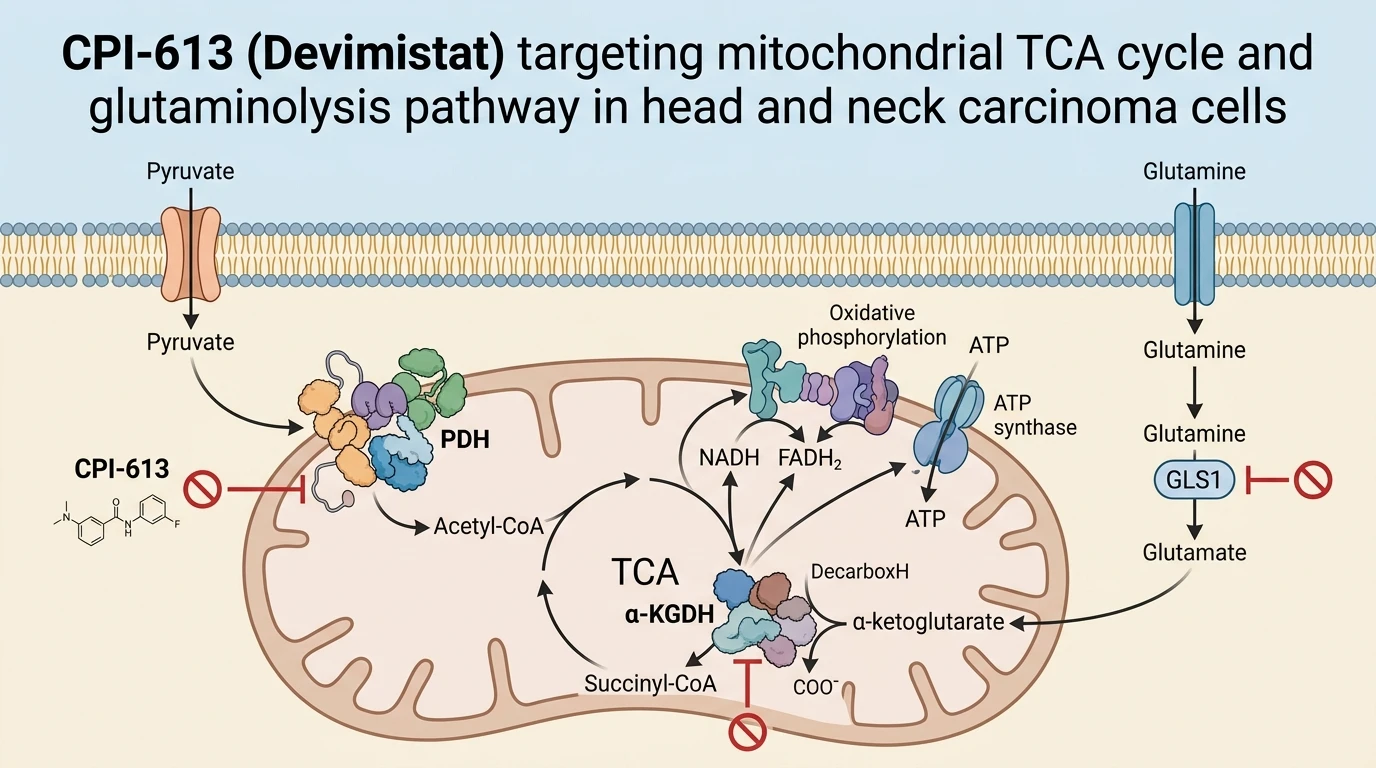
Head and neck squamous cell carcinoma (HNSCC) exhibits profound bioenergetic reprogramming, relying heavily on mitochondrial metabolism and nutrient scavenging to sustain rapid cellular proliferation. Central to mitochondrial energy transduction is the tricarboxylic acid (TCA) cycle, an enzymatic hub that supplies reducing equivalents—specifically NADH and FADH2—to the electron transport chain. Pyruvate dehydrogenase (PDH) and alpha-ketoglutarate dehydrogenase (α-KGDH) serve as rate-limiting multienzyme complexes within this process. PDH catalyzes the irreversible oxidative decarboxylation of glycolytic pyruvate into acetyl-CoA, whereas α-KGDH converts α-ketoglutarate to succinyl-CoA. Both multienzyme complexes require lipoic acid as an essential cofactor for the E2 acyltransferase catalytic core, rendering these complexes vulnerable to structural lipoate analogs.
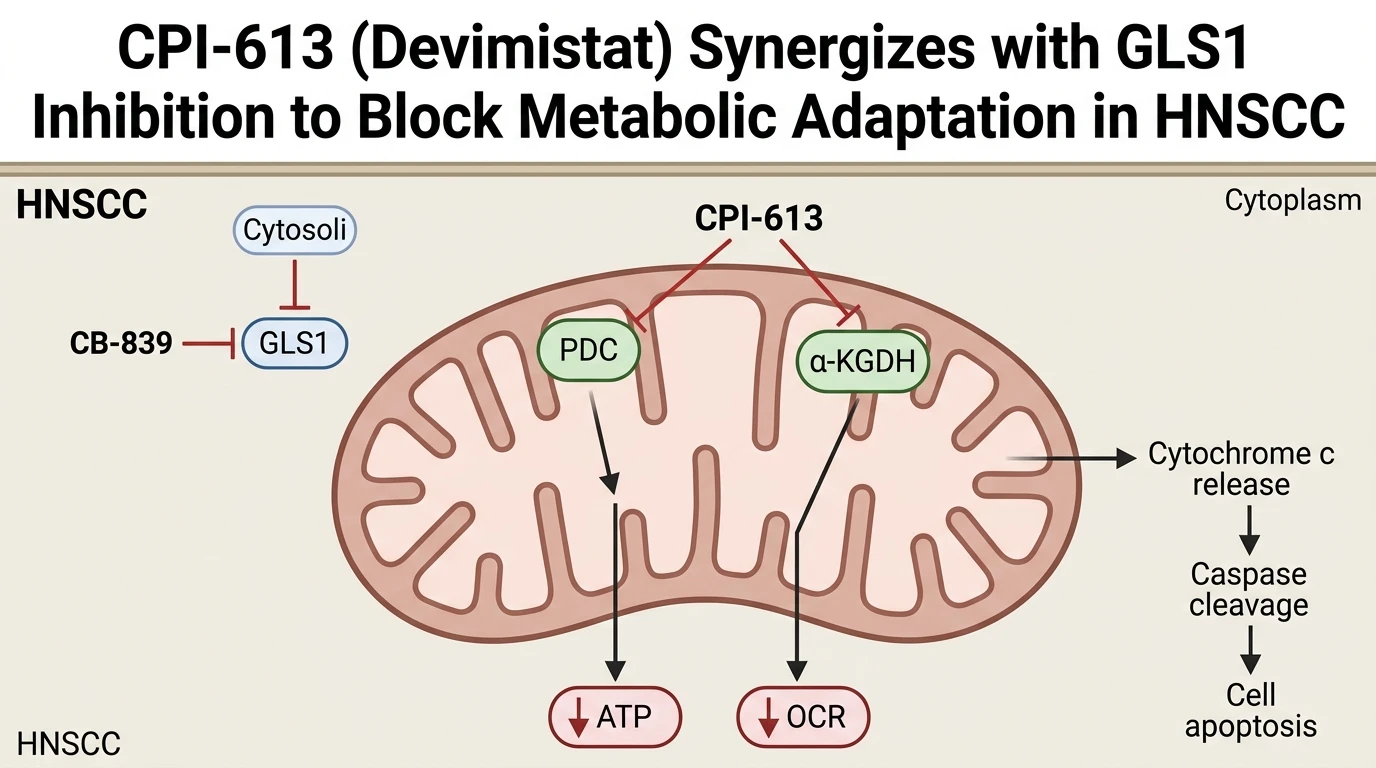
CPI-613 (Devimistat) is a lipoate mimic synthesized to selectively target lipoate-utilizing mitochondrial enzymes. Upon entering the mitochondrial matrix, CPI-613 induces hyper-phosphorylation and inactivation of the E1 subunit of PDH while simultaneously inhibiting α-KGDH enzymatic activity through direct cofactor competition. In sensitive transformed cells, this dual action halts TCA cycle flux, decreases oxygen consumption, and depletes intracellular ATP pools. However, malignant cells frequently demonstrate metabolic plasticity. When PDH and α-KGDH are suppressed by CPI-613, HNSCC cells initiate an adaptive metabolic response mediated by glutaminolysis.
Glutaminolysis involves the conversion of L-glutamine into glutamate by glutaminase 1 (GLS1), followed by the deamination of glutamate into α-ketoglutarate via glutamate dehydrogenase or transaminases. This pathway functions as an anaplerotic engine, refilling depleted TCA cycle intermediates downstream of the PDH block. Under tested in vitro assay conditions, single-agent administration of CPI-613 triggers a compensatory upregulation of GLS1 transcript and protein expression in HNSCC cells. This enzymatic shift maintains flux through α-ketoglutarate, neutralizing the cytotoxic impact of isolated PDH and α-KGDH blockade and limiting monotherapy efficacy.
To overcome this adaptive resistance mechanism, a dual-inhibition protocol combining CPI-613 with the selective GLS1 inhibitor CB-839 (telaglenastat) was evaluated. Mechanistically, CB-839 binds allosterically to GLS1, halting the conversion of glutamine to glutamate and blocking the anaplerotic supply line required by TCA-deprived mitochondria. Concurrent exposure to CPI-613 and CB-839 creates a synthetic lethal state. By simultaneously disabling pyruvate entry into the TCA cycle via PDH blockade and shutting down glutamine-derived anaplerosis via GLS1 inhibition, the dual regimen starves the tumor cell of critical metabolic substrate inputs. Biochemical analyses reveal a severe collapse in baseline oxygen consumption rate, marked intracellular ATP depletion, and activation of the intrinsic apoptotic cascade, evidenced by mitochondrial outer membrane permeabilization, caspase-3/7 cleavage, and PARP fragmentation across 2D cell monolayers, 3D tumor spheroids, and orthotopic HNSCC mouse models.
Pharmacological Characterization and Synthetic Lethal Metabolic Targeting
Copy code to add this image to your page
CPI-613 (Devimistat) acts as a lipoate analog that inhibits mitochondrial TCA cycle complexes pyruvate dehydrogenase (PDH) and alpha-ketoglutarate dehydrogenase (α-KGDH). Monotherapy in head and neck squamous cell carcinoma triggers an adaptive upregulation of glutaminase 1 (GLS1)-mediated glutaminolysis. Co-targeting GLS1 with CB-839 abrogates this compensatory survival mechanism, suppressing TCA cycle flux and cellular oxygen consumption. This dual blockade depletes ATP, induces apoptosis, and suppresses tumor growth in orthotopic mouse models without systemic toxicity.
Compensatory GLS1 Upregulation Limits Monotherapy Efficacy in HNSCC
Targeting mitochondrial metabolism via single-agent administration reveals rapid metabolic adaptation in patient-derived HNSCC models. Exposure to CPI-613 induces direct biochemical inhibition of pyruvate dehydrogenase and alpha-ketoglutarate dehydrogenase. Enzymatic flux through acetyl-CoA declines sharply within hours. Mitochondrial baseline oxygen consumption decreases initially. However, cells regain metabolic homeostasis through rapid transcriptional up-regulation of glutaminase 1 (GLS1). Elevated GLS1 catalytic activity drives accelerated conversion of extracellular glutamine to glutamate. This glutamate is subsequently converted into α-ketoglutarate, restoring downstream TCA flux. Consequently, cell viability remains largely preserved under CPI-613 monotherapy at physiologically achievable concentrations. This adaptive phenomenon demonstrates that single-target TCA cycle disruption is insufficient for complete bioenergetic collapse.
Dual Enzymatic Blockade Depletes Bioenergetics and Induces Apoptosis
Combining the lipoate analog with CB-839 effectively neutralizes this adaptive survival mechanism. CB-839 selectively binds the allosteric pocket of GLS1, halting glutamine deamination. When co-administered with CPI-613, mitochondrial fuel entry is restricted at both pyruvate and glutamine nodes. Cellular viability drops sharply. Extracellular flux analysis indicates a persistent reduction in oxygen consumption rate exceeding eighty percent. Intracellular ATP levels fall rapidly within six hours of exposure. This severe bioenergetic crisis triggers mitochondrial depolarization—a key precursor to intrinsic apoptosis. Immunoblotting confirms robust cleavage of caspase-3 and PARP across tested HNSCC lines. Healthy human control cells show minimal toxic responses under identical dosing regimens.
Dual Metabolic Targeting Attenuates Orthotopic Xenograft Growth in Vivo
Validation of this combination therapy was performed in immunocompromised mice bearing orthotopic HNSCC xenografts. Animals receiving monotherapy exhibited moderate tumor growth retardation. In contrast, dual targeting achieved marked tumor volume regression over a three-week treatment cycle. Histological analysis of harvested tumor tissue confirmed reduced Ki-67 proliferation indices and elevated terminal deoxynucleotidyl transferase dUTP nick end labeling (TUNEL) positivity. Mouse body weights remained stable throughout the study course. Serum biomarkers of hepatic and renal function showed no significant deviations from baseline parameters. These empirical observations indicate that dual inhibition of mitochondrial TCA enzymes and GLS1 yields strong antineoplastic efficacy without inducing systemic toxicity in this model system.