PF-07220060 (CDK4/6-IN-6) PF07220060 Targets CDK4/6 to Block Cell Cycle Progression
Copy code to add this image to your page
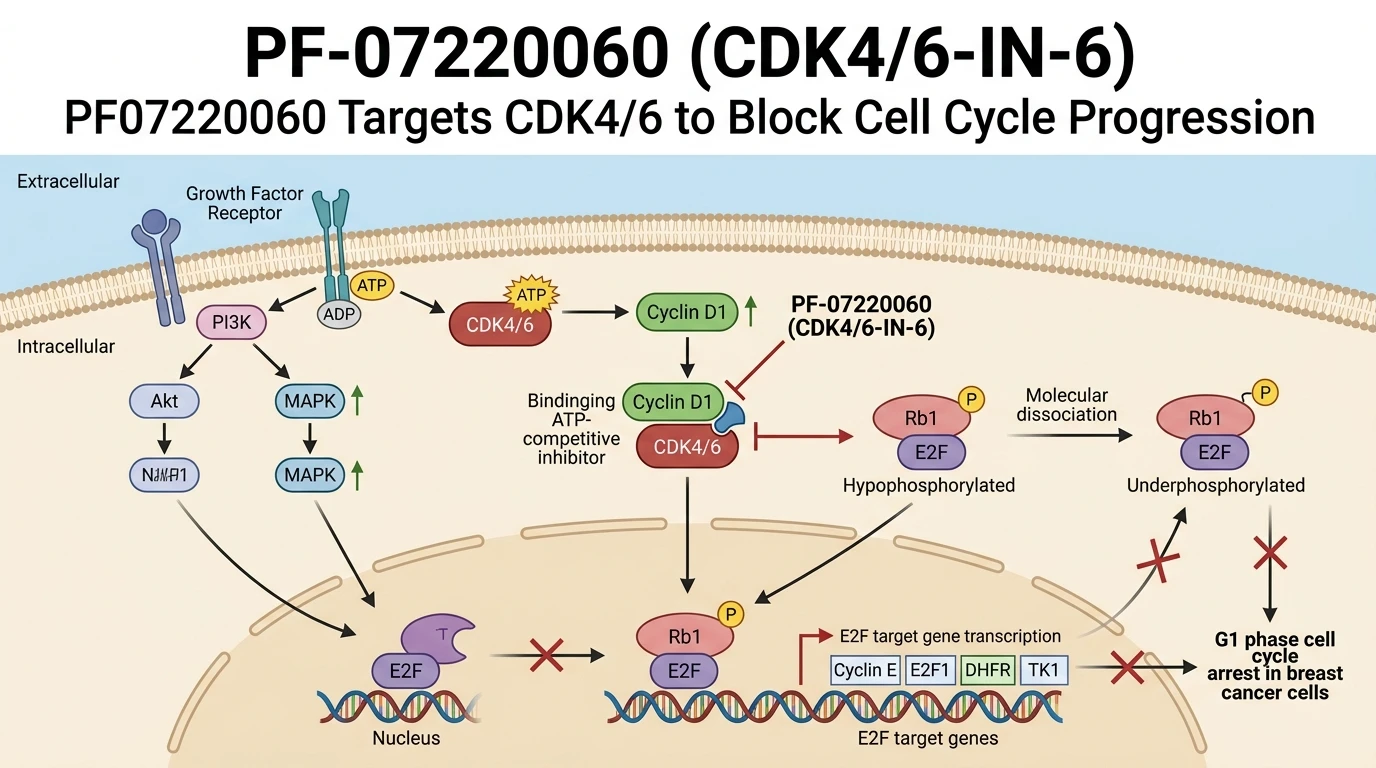
Breast cancer presents marked molecular heterogeneity, categorized into distinct intrinsic subtypes including hormone receptor-positive (HR+), human epidermal growth factor receptor 2-amplified (HER2+), and triple-negative phenotypes. Therapeutic efficacy requires interventions matched to specific oncogenic drivers and cell cycle regulators. In HR-positive breast cancer, mitogenic estrogen signaling accelerates progression through the G1 phase of the cell cycle by upregulating cyclin D1 expression. Cyclin D1 forms an active catalytic complex with cyclin-dependent kinase 4 or cyclin-dependent kinase 6 (CDK4/6). This enzymatic complex initiates the phosphorylation of Retinoblastoma 1 (Rb1) at specific serine residues, including Ser780 and Ser807/811. Unphosphorylated or mono-phosphorylated Rb1 actively sequesters E2F transcription factors, enforcing a cellular checkpoint that halts entry into S phase.
Pharmacological targeting of this axis relies on small-molecule ATP-competitive inhibitors. The investigational compound PF-07220060 (CDK4/6-IN-6), also evaluated under the designation PF07220060, specifically engages the catalytic cleft of CDK4 and CDK6. By blocking the ATP-binding pocket, PF-07220060 suppresses the kinase activity of the CDK4/6-cyclin D1 complex. Under tested in vitro assay conditions, selective CDK4/6 inhibition prevents initial Rb1 phosphorylation, maintaining Rb1 in its active, tumor-suppressive state. Bound Rb1 continues to repress E2F-mediated transcription of downstream cell cycle effectors, including cyclin E2 and thymidine kinase 1. Consequently, carcinoma cells experience persistent G1 phase arrest, preventing unscheduled genomic replication.
In clinical evaluations of HR-positive, HER2-negative advanced breast cancer, combining CDK4/6 inhibitors with endocrine therapies—such as aromatase inhibitors or selective estrogen receptor degraders like fulvestrant—significantly improves progression-free survival metrics relative to endocrine monotherapy. Endocrine agents suppress estrogen receptor-driven transcription of CCND1 (encoding cyclin D1), while CDK4/6 inhibitors directly suppress residual kinase catalytic function. This dual inhibition produces synergistic blockade of G1-to-S transition.
Despite clinical efficacy, drug resistance frequently develops during prolonged treatment. Resistance mechanisms involve diverse genomic alterations and clonal evolution patterns. Loss-of-function mutations or epigenetic silencing of RB1 abolish the primary biochemical substrate of CDK4/6, rendering cell cycle progression independent of CDK4/6 catalytic activity. Amplification of CCNE1 or CCNE2 leads to constitutive CDK2 activation, bypassing CDK4/6 upstream control to directly hyper-phosphorylate Rb1. Additional resistance mechanisms identified in patient-derived cell models include point mutations in CDK4 or CDK6 that alter drug-binding affinity, loss of the tumor suppressor FAT1 leading to Hippo signaling inactivation, and activation of compensatory receptor tyrosine kinase pathways such as FGFR signaling. Mapping these specific genomic variations provides essential parameters for developing combination regimens to overcome acquired resistance.
Pharmacological Evaluation and Clonal Resistance Dynamics
Copy code to add this image to your page
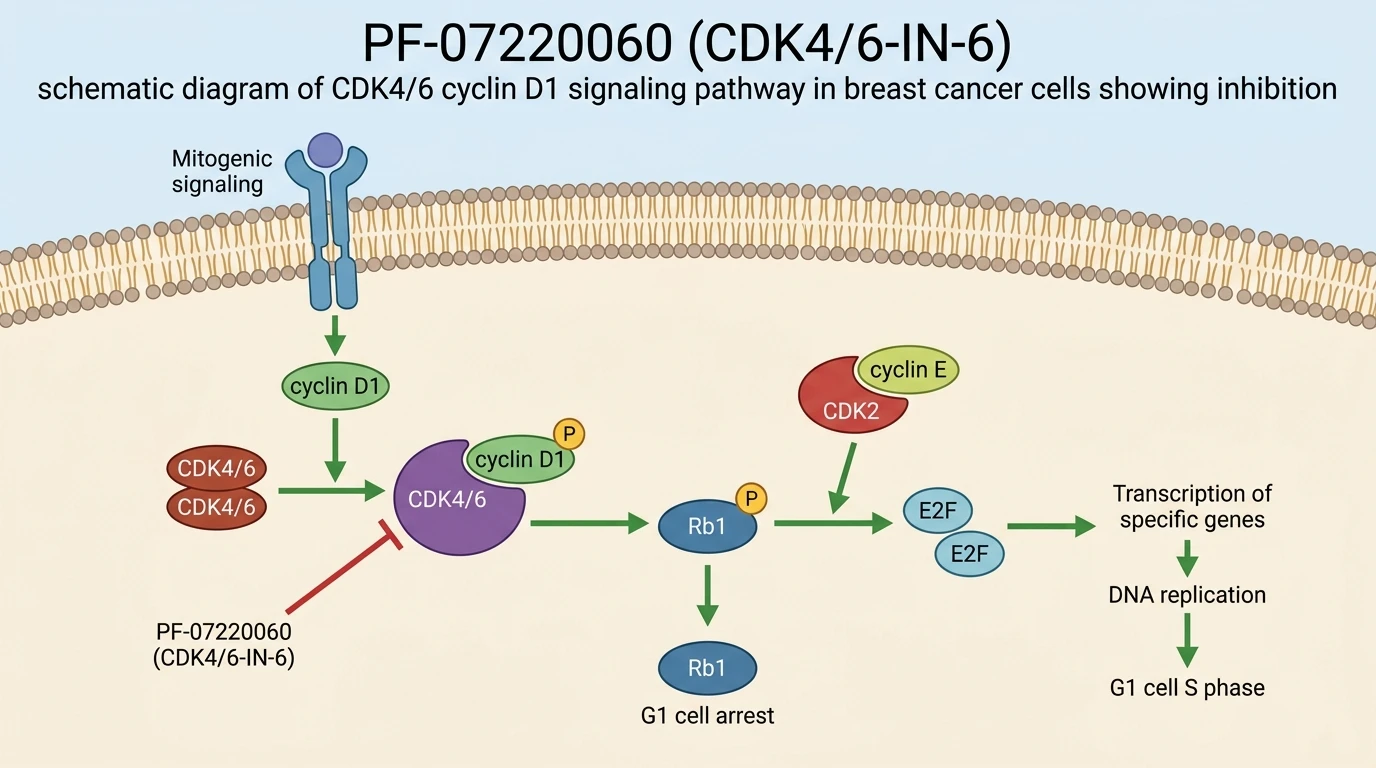
PF-07220060 selectively inhibits the CDK4/6-cyclin D1 complex, blocking the initial phosphorylation of Retinoblastoma 1 (Rb1) protein. Suppressing Rb1 phosphorylation prevents the release of E2F transcription factors required for transcribing G1/S phase transition genes. This molecular blockade arrests tumor cells in the G1 phase of the cell cycle, impairing proliferative capacity. Combined with endocrine blockade, CDK4/6 inhibition prevents adaptive mitogenic signaling in HR-positive breast cancer models.
Attenuated Rb1 Phosphorylation Drives G1 Phase Arrest
Targeting the cyclin D1 activation complex restricts mitotic signaling in luminal breast carcinoma models. In cultured HR-positive cell lines exposed to PF07220060, intracellular phosphorylation of Rb1 at Ser780 decreased rapidly within four hours of administration. Unphosphorylated Rb1 maintained tight association with E2F1 complexes. Downstream transcription of S-phase genes ceased completely. Flow cytometry analysis confirmed marked accumulation of cells in the G1 phase. Cellular proliferation rates dropped substantially without inducing immediate apoptotic cascade triggers.
Genomic Alterations Bypass CDK4/6 Blockade Under Endocrine Pressure
Prolonged exposure to targeted kinase inhibitors drives clonal evolution in heterogenous tumor populations. In xenograft tumor models treated with long-term PF07220060 monotherapy, resistant subline populations emerged over twelve weeks. Genomic sequencing revealed distinct CCNE1 gene amplifications in non-responsive tumor biopsies. Augmented cyclin E1 levels activated CDK2 directly to bypass CDK4/6 catalytic requirements. Target phosphorylation resumed despite total physical blockade of CDK4/6 active sites.