c-Met Inhibitors
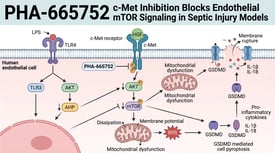
The c-Met receptor, also known as hepatocyte growth factor receptor (HGFR), is a transmembrane tyrosine kinase that is essential for embryonic development, wound healing, and tissue regeneration. It is uniquely activated by its high-affinity ligand, hepatocyte growth factor (HGF). Upon HGF binding, c-Met undergoes homodimerization and transphosphorylation of its C-terminal docking site, which recruits various signaling effectors such as Grb2, Gab1, and SHP2. This activation triggers a pleiotropic cellular response through the PI3K/Akt, Ras/MAPK, STAT3, and Src pathways, collectively promoting invasive growth—a process characterized by cell proliferation, survival, motility, and epithelial-mesenchymal transition (EMT). In oncology, c-Met dysregulation occurs through gene amplification, overexpression, or specific mutations, such as MET exon 14 skipping. These alterations are frequently observed in non-small cell lung cancer (NSCLC), gastric cancer, and papillary renal cell carcinoma, where they drive tumor aggressiveness and poor prognosis. Inhibitors of the c-Met pathway are generally classified into three main categories.
Type I inhibitors are ATP-competitive molecules that bind the active conformation of the kinase. They are further divided into Type Ia (e.g., crizotinib), which interacts with the Gly1163 residue, and Type Ib (e.g., capmatinib, tepotinib, and savolitinib), which are more selective and do not require this interaction. Type II inhibitors (e.g., cabozantinib, merestinib) are also ATP-competitive but bind the inactive DFG-out conformation, often exhibiting a multi-kinase inhibitory profile. Type III inhibitors represent allosteric modulators that bind outside the ATP pocket. Additionally, biological agents including monoclonal antibodies like onartuzumab and amivantamab (a bispecific antibody targeting both EGFR and MET) have expanded the therapeutic landscape. The clinical success of c-Met inhibitors has been most notable in NSCLC patients harboring MET exon 14 skipping mutations, leading to the regulatory approval of capmatinib and tepotinib. However, resistance remains a significant clinical challenge.
Secondary mutations in the MET kinase domain, such as D1228 and Y1230, can impair drug binding, particularly for Type I inhibitors. Furthermore, off-target resistance can occur through the activation of alternative pathways like the HER family or the MAPK pathway. To combat this, researchers are investigating combination therapies that pair c-Met inhibitors with EGFR inhibitors or MEK inhibitors. Another emerging area of interest is the role of c-Met in mediating resistance to other targeted therapies; for example, MET amplification is a well-documented mechanism of resistance to third-generation EGFR TKIs like osimertinib. Beyond small molecules, antibody-drug conjugates (ADCs) targeting c-Met are currently in clinical development, aiming to deliver cytotoxic payloads directly to MET-overexpressing tumor cells. The continued refinement of patient selection through molecular profiling and the development of next-generation inhibitors that can overcome gatekeeper mutations remain the primary focus of current c-Met research. This includes exploring the potential of MET inhibition in overcoming the immune-suppressive tumor microenvironment, as MET signaling has been linked to the recruitment of myeloid-derived suppressor cells.