Pexidartinib (PLX3397) CSF1R Inhibition in Combined Radiotherapy and Androgen Deprivation
Copy code to add this image to your page
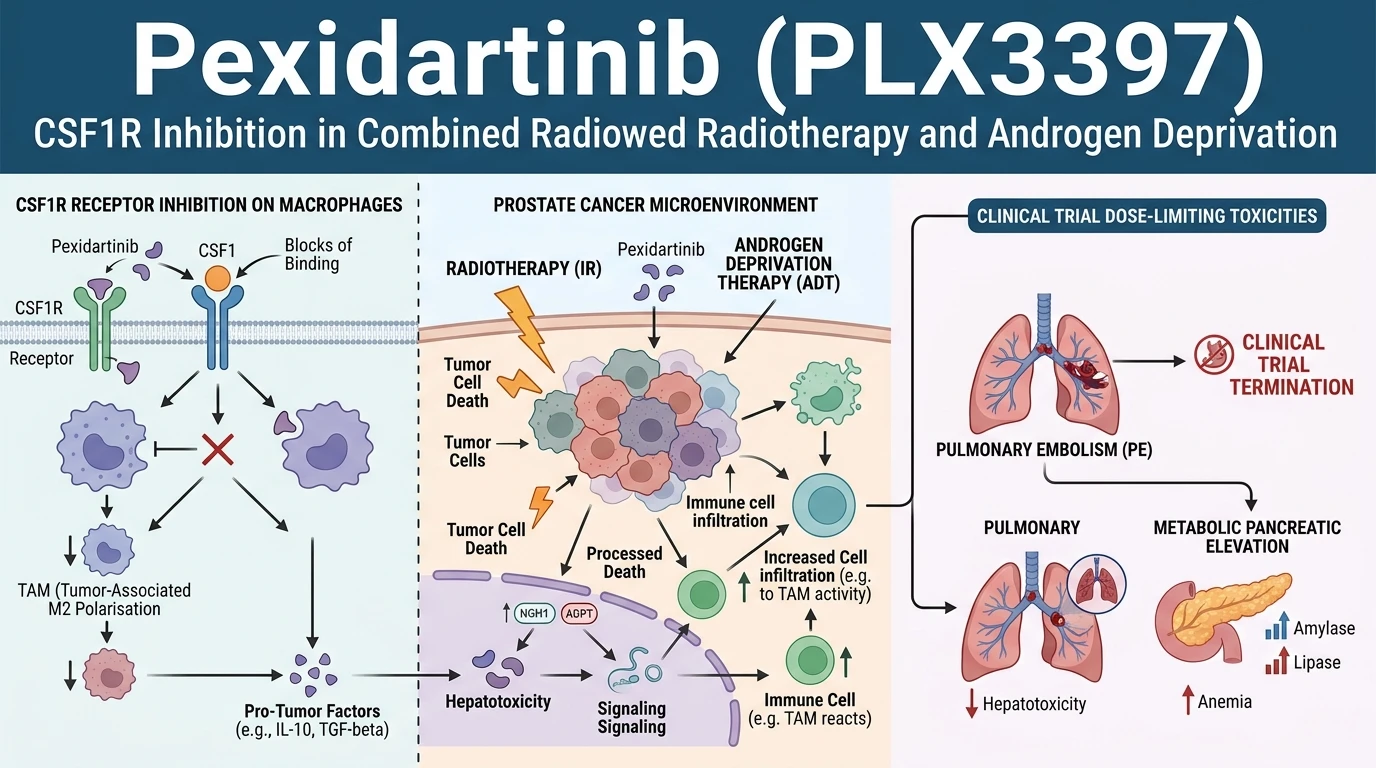
Androgen deprivation therapy (ADT) and localized radiation therapy (RT) remain cornerstone interventions for patients diagnosed with intermediate- and high-risk localized prostate adenocarcinoma. While ionizing radiation damages genomic DNA to induce double-strand breaks in prostate epithelial cells, androgen deprivation suppresses androgen receptor (AR) transcriptional activity, driving apoptosis in androgen-dependent populations. However, these cytotoxic and antihormonal insults disrupt the tumor microenvironment architecture. Acute cell death and local tissue hypoxia trigger the secretion of pro-inflammatory cytokines and chemokines, notably chemokine (C-C motif) ligand 2 (CCL2) and colony-stimulating factor 1 (CSF1). These factors recruit circulating classical monocytes into the irradiated and androgen-deprived tumor parenchyma.
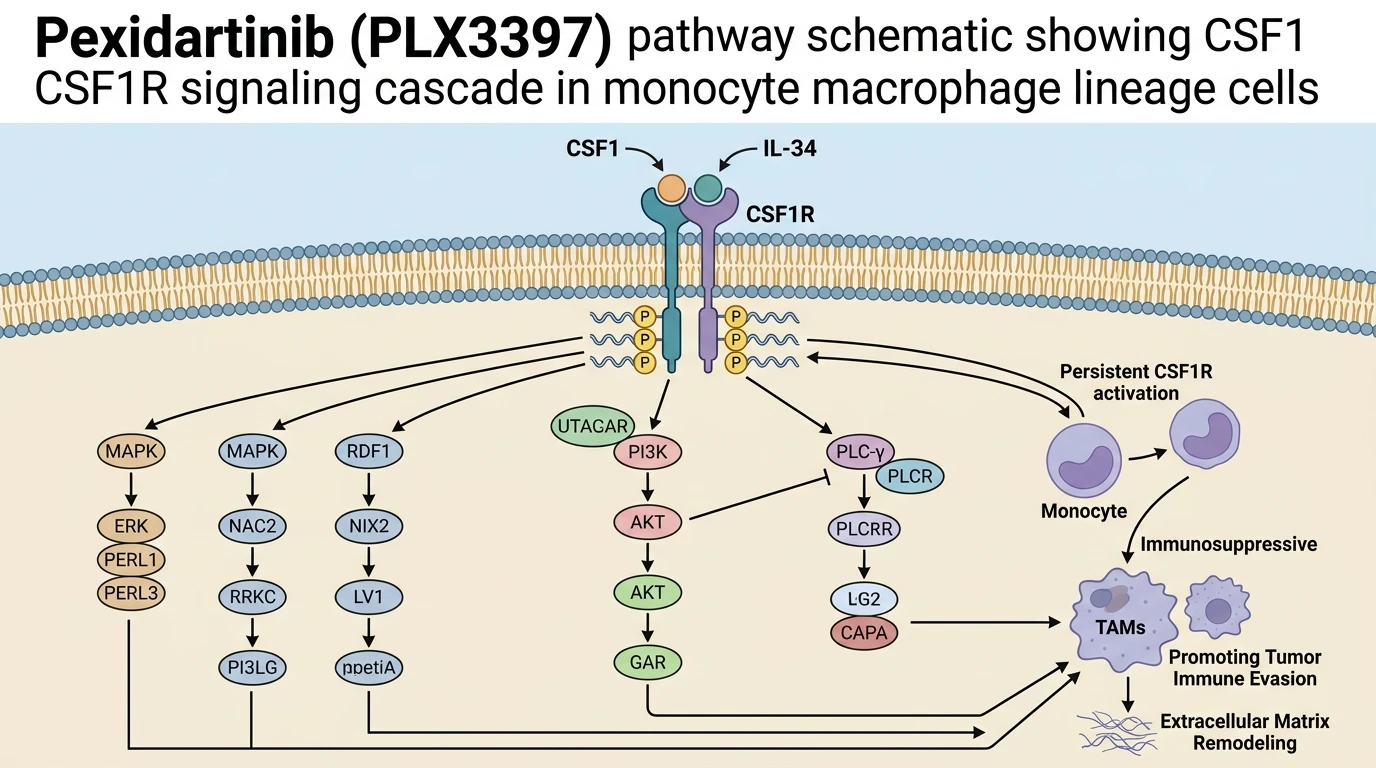
Once localized within the prostatic stroma, recruited monocytes differentiate into tumor-associated macrophages (TAMs) under the influence of persistent CSF1 signaling. CSF1 engages the colony-stimulating factor 1 receptor (CSF1R), a membrane-spanning receptor tyrosine kinase expressed predominantly on myeloid lineage cells. Ligand binding induces receptor dimerization, triggering autophosphorylation across specific intracellular tyrosine residues (including Tyr561, Tyr723, and Tyr809). These phosphotyrosine sites act as docking platforms for SH2 domain-containing signaling molecules, initiating downstream signaling through the phosphatidylinositol 3-kinase (PI3K)/AKT and mitogen-activated protein kinase (MAPK)/extracellular signal-regulated kinase (ERK) pathways. In TAMs, sustained CSF1R activation maintains survival, drives M2-like immunosuppressive polarization, and stimulates the release of pro-angiogenic molecules such as vascular endothelial growth factor (VEGF) and matrix metalloproteinases (MMPs). Consequently, TAM infiltration acts as a biological shield, promoting therapeutic resistance, vascular remodeling, and early disease recurrence following radiation and hormonal therapy.
Pharmacological targeting of CSF1R was envisioned as a key strategy to eliminate TAM-mediated radioprotection and hormonal resistance. Pexidartinib (PLX3397) is an orally bioavailable, small-molecule ATP-competitive tyrosine kinase inhibitor engineered for selectivity against CSF1R, alongside target activity against KIT and FLT3. By occupying the ATP-binding pocket of CSF1R, PLX3397 prevents ligand-induced receptor autophosphorylation, blocking downstream survival signaling and triggering apoptosis in monocyte-derived macrophages. In preclinical syngeneic and xenograft tumor models, systemic administration of PLX3397 effectively depleted tissue-resident TAMs, reduced microvessel density, and enhanced tumor sensitivity to ionizing radiation and targeted hormonal blockades.
Based on these compelling mechanistic observations, an open-label Phase 1 clinical trial was initiated to evaluate the combination of Pexidartinib (PLX3397), RT, and ADT in men with intermediate- and high-risk localized prostate cancer. The therapeutic objective was to deliver a pre-radiation lead-in phase of pexidartinib to clear intra-tumoral TAMs, followed by concurrent administration with standard definitive RT and long-term ADT.
However, clinical evaluation revealed prohibitive safety concerns that abruptly stalled therapeutic translation. Out of the four patients enrolled in the initial dosing cohort, three individuals experienced severe grade 3 dose-limiting toxicities (DLTs) directly attributed to pexidartinib monotherapy during the pre-radiation phase. Patients developed a constellation of systemic adverse events, including profound fatigue, severe joint pain, pulmonary embolism, marked elevation of serum amylase, and widespread pruritus. The rapid onset of these DLTs prior to radiation exposure demonstrated that systemic CSF1R inhibition combined with ADT produces compounding physiological stress. The identification of a grade 3 pulmonary embolism raised critical safety signals regarding vascular homeostasis and altered coagulation states under concurrent androgen withdrawal and myeloid receptor blockade. Furthermore, pancreatic enzyme elevations highlighted potential off-target kinase inhibition or systemic inflammatory responses.
Because 75% of the treated cohort encountered severe DLTs prior to receiving a single fraction of radiotherapy, trial protocols met predefined stopping criteria, compelling immediate study termination. The primary investigators concluded that combining pexidartinib with RT and ADT yields unacceptable toxicity in men with localized prostate cancer, indicating that this combinatorial strategy does not merit further clinical testing in this patient population.
Pharmacological Evaluation and Clinical Toxicity Constraints
Copy code to add this image to your page
Pexidartinib (PLX3397) acts as a small-molecule kinase inhibitor selective for colony-stimulating factor 1 receptor (CSF1R). By competing with ATP at the active site, it blocks CSF1R autophosphorylation and downstream survival signaling in tumor-associated macrophages (TAMs). This blockade aims to deplete immunosuppressive M2-like TAMs and reverse macrophage-mediated resistance to radiation and androgen deprivation therapy. However, clinical implementation alongside radiation and hormone therapies is limited by acute dose-limiting toxicities prior to radiation delivery.
Target Engagement Dynamics in Myeloid Infiltration Models
Targeting CSF1R disrupts critical macrophage recruitment cascades. In murine prostate carcinoma models, PLX3397 selectively suppressed CSF1R tyrosine phosphorylation, resulting in rapid depletion of CD206-positive M2 macrophages within the primary tumor microenvironment. Tumor microvessel density decreased significantly following target inhibition. This myeloid depletion blunted local transforming growth factor-beta release, temporarily restoring CD8-positive cytotoxic T cell infiltration and enhancing cellular sensitivity to fractionated radiation doses. Intratumoral cytokine profiles shifted toward pro-inflammatory phenotypes. However, this pharmacodynamic efficacy in isolated mouse tissues failed to predict the severe systemic toxicities encountered during clinical combination protocols.
Acute Systemic Toxicities Halt Early Clinical Translation
Clinical combination therapy produced severe multi-organ adverse events. Three of four enrolled patients experienced grade 3 dose-limiting toxicities during lead-in administration of PLX3397, long before initiating scheduled radiation therapy. Systemic symptoms included debilitating fatigue and severe arthralgia. Physiologically, concurrent androgen deprivation and CSF1R blockade altered systemic inflammatory homeostasis, precipitating vascular thromboembolism and acute pancreatic enzyme elevations across the treated cohort. Severe cutaneous pruritus further compromised patient compliance. Consequently, high toxicity rates forced immediate study termination, establishing that pexidartinib cannot be safely combined with standard radiotherapeutic protocols in prostate cancer.