Bromopyruvic acid (3-BP) Carbohydrate Metabol inhibitor activity and systemic protein quenching
Copy code to add this image to your page
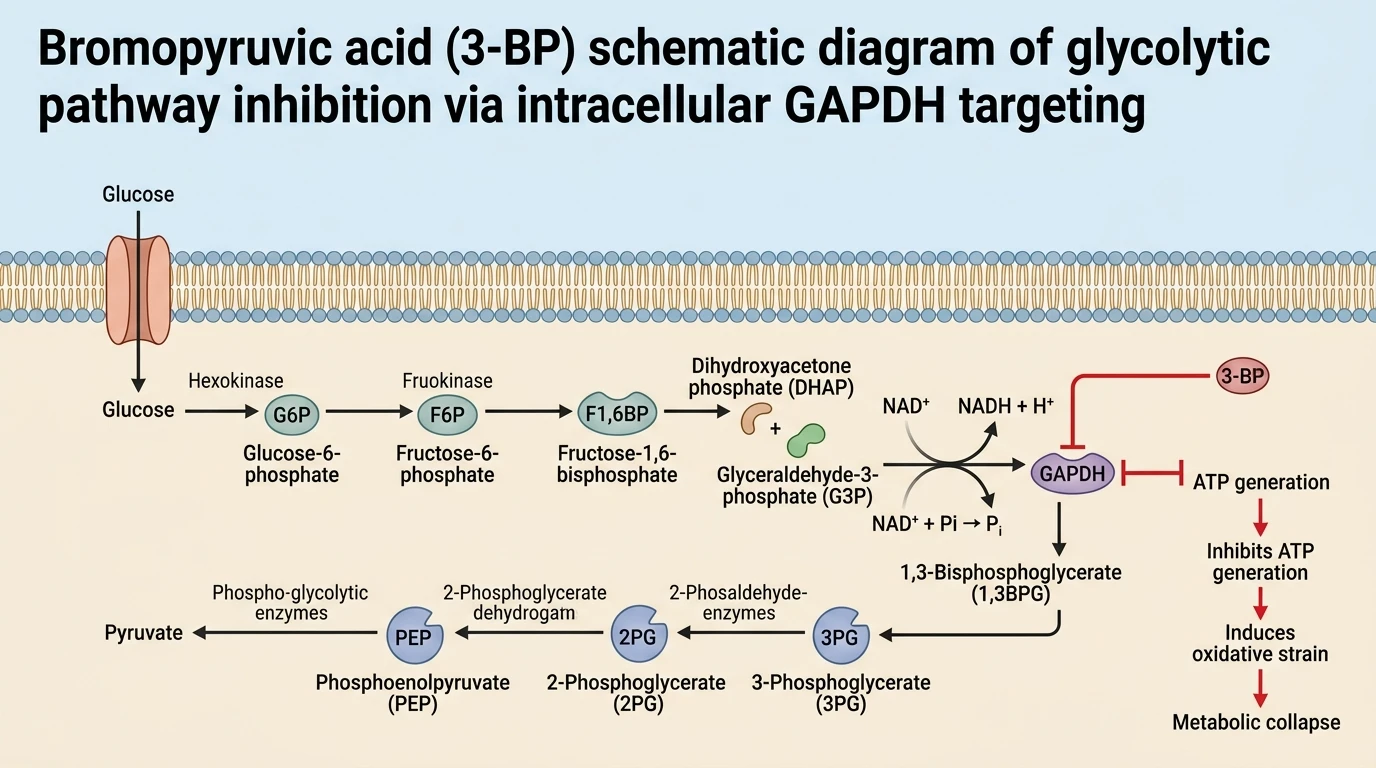
Malignant transformation alters cellular metabolism, enforcing an absolute dependence on high-rate glycolytic flux to fuel rapid bioenergetic and anabolic demands. This metabolic rewiring—historically characterized as the Warburg effect—presents an attractive therapeutic target. Glyceraldehyde-3-phosphate dehydrogenase (GAPDH) occupies a key regulatory junction in this pathway, catalyzing the reversible oxidative phosphorylation of glyceraldehyde-3-phosphate into 1,3-bisphosphoglycerate while reducing NAD+ to NADH. Pharmacological disruption of GAPDH causes immediate energetic failure in glycolytically dependent tumor cell lines. Among small-molecule glycolytic antagonists, 3-bromopyruvate (3-BrPA or 3-BP) functions as a reactive haloalkanoic acid derivative that covalently alkylates active-site cysteine residues within GAPDH, terminating enzymatic catalysis.
While local regional delivery of 3-BrPA exhibits strong antitumor efficacy in preclinical cancer models, the systemic administration of potent alkylating agents often carries a high risk of off-target organ toxicities. Surprisingly, systemic administration of Bromopyruvic acid (3-BP) at therapeutic concentrations (1.75 mM) in animal models demonstrates an unexpected safety profile, yielding no observable toxicity in healthy tissues. To establish the biological basis of this paradoxical tolerance, researchers conducted comprehensive radiotracer, histopathological, and proteomic investigations in Sprague-Dawley rats using radiolabeled 14C-3-BrPA.
Quantitative tissue autoradiography following intravenous 14C-3-BrPA injection demonstrated rapid distribution of radiolabeled species across major vascularized organs, including the liver, kidneys, spleen, myocardium, and lungs. Crucially, autoradiographic analysis revealed that 14C-3-BrPA does not cross the intact blood-brain barrier, preventing central nervous system exposure. Histopathological evaluation of visceral tissues harvested after systemic dosing confirmed normal cellular architecture across all organ systems. Hematoxylin and eosin (H&E) staining showed no signs of parenchymal necrosis, acute inflammation, or microvascular damage. Complementary terminal deoxynucleotidyl transferase dUTP nick end labeling (TUNEL) assays verified the absence of apoptotic cascades in non-malignant hepatic and renal tissues. Histological examinations were validated according to standardized immunohistochemical tissue profiling procedures, confirming intact cellular architecture.
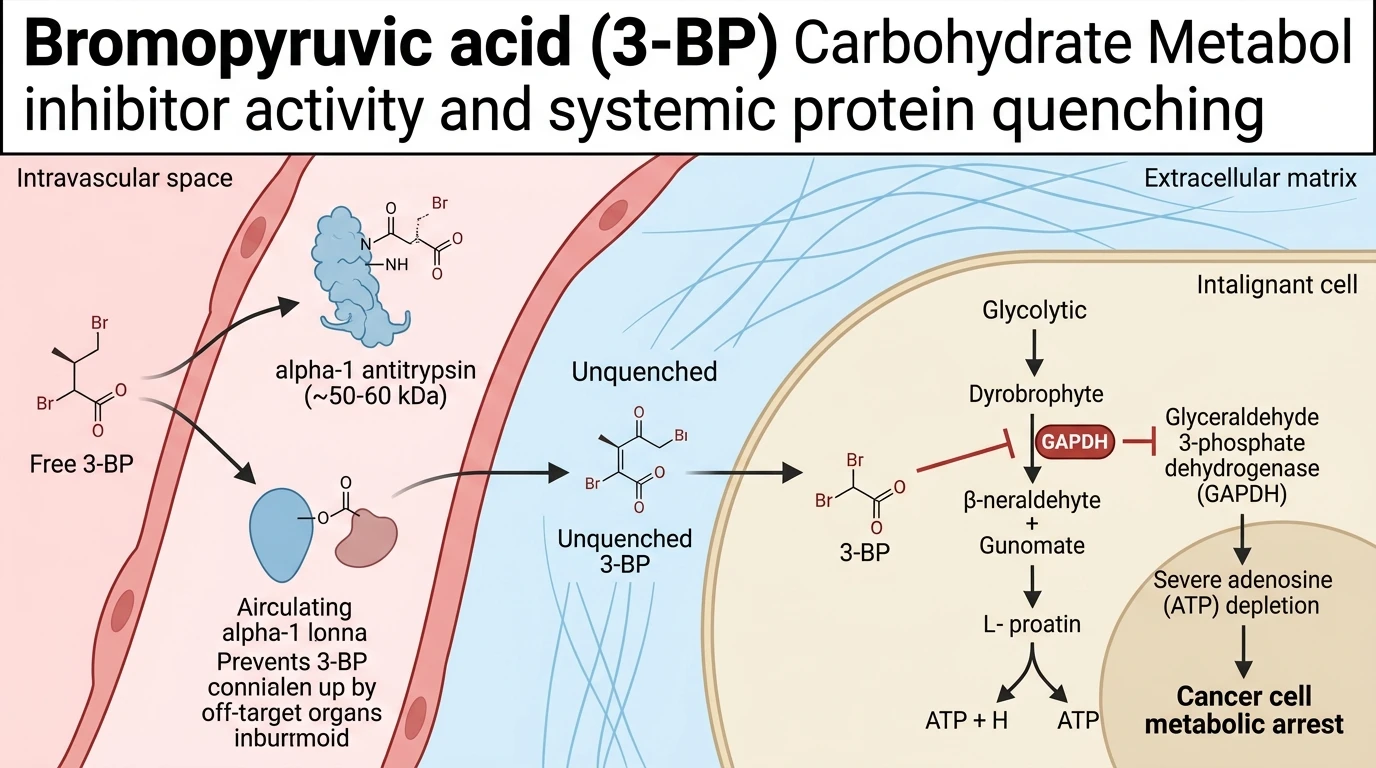
To resolve the mechanism underlying this organ-sparing phenomenon, investigators analyzed serum protein interactions using sodium dodecyl sulfate-polyacrylamide gel electrophoresis (SDS-PAGE), two-dimensional gel electrophoresis, and liquid chromatography-tandem mass spectrometry (LC-MS/MS). Proteomic profiling of rat blood samples collected shortly after 14C-3-BrPA infusion revealed that the circulating free compound undergoes rapid and selective covalent binding to endogenous serum proteins. Electrophoretic separation established that radiolabeled 3-BrPA predominantly forms stable adducts with proteins migrating within the ~50–60 kDa molecular weight range. Mass spectrometry identified these electrophilic sinks as alpha-1 antitrypsin (alpha1-AT) and an albuminoid-family peptide fragment.
This rapid intravascular quenching mechanism provides a definitive biochemical explanation for the observed therapeutic window. Upon entering circulation, free 3-BrPA reacts preferentially with abundant thiol and nucleophilic side chains on serum alpha1-AT, rapidly neutralizing the reactive bromopyruvic acid electrophile before it can penetrate healthy tissue parenchyma or initiate non-specific cell damage. Because serum protein alkylation depletes free systemic drug levels, normal tissues are protected from non-specific glycolytic blockade. Conversely, locally delivered or intratumorally accumulated drug bypasses systemic quenching, retaining full capability to inhibit intracellular GAPDH and induce metabolic collapse in target lesions.
Pharmacokinetic Neutralization and Proteomic Target Characterization
Copy code to add this image to your page
3-Bromopyruvate (3-BP) exerts potent antineoplastic effects by alkylating GAPDH, terminating glycolytic ATP production in cancer cells. Despite high electrophilic reactivity, systemic administration at 1.75 mM exhibits minimal host toxicity. In vivo radiolabeling and proteomic profiling reveal rapid, selective covalent binding of free 3-BP to circulating serum proteins, notably alpha-1 antitrypsin (alpha1-AT) and albuminoid peptides (~50–60 kDa). This dynamic intravascular quenching rapidly depletes free electrophile concentrations, shielding healthy organs while permitting effective local glycolytic inhibition within malignant tissues.
Preserved Tissue Architecture Under Systemic Dose Escalation
Systemic exposure to alkylating metabolic inhibitors frequently causes non-specific tissue damage. Systemic administration of Bromopyruvic acid (3-BP) Carbohydrate Metabol inhibitor at 1.75 mM in rodent models did not trigger systemic organ toxicity. Quantitative tissue autoradiography using radiolabeled 14C-3-BrPA demonstrated broad visceral organ uptake. Parenchymal accumulation occurred rapidly in renal and hepatic tissues. Notably, the compound failed to cross the blood-brain barrier. Histological evaluation via hematoxylin and eosin staining revealed intact microarchitecture across all analyzed tissues; furthermore, TUNEL assays confirmed the absence of apoptotic signaling in liver and kidney parenchyma. Cellular viability remained intact.
Rapid Serum Protein Binding Neutralizes Circulating Electrophiles
Systemic tolerance requires rapid inactivation of reactive alkylating agents before non-specific covalent modification of healthy cell membranes occurs. Proteomic characterization combining SDS-PAGE separation, two-dimensional gel electrophoresis, and liquid chromatography-tandem mass spectrometry (LC-MS/MS) revealed immediate binding of 14C-3-BrPA to circulating rat plasma proteins. Free electrophilic 3-BrPA preferentially alkylated serum proteins migrating in the 50–60 kDa range. Molecular identification confirmed primary adduct formation with alpha-1 antitrypsin (alpha1-AT) and a related albuminoid-family peptide. Covalent adduction by alpha1-AT quenches free Bromopyruvic acid (3-BP) Carbohydrate Metabol inhibitor molecules in intravascular spaces. This scavenging mechanism maintains low circulating free drug levels. Concurrently, localized intratumoral concentrations remain sufficient to suppress glyceraldehyde-3-phosphate dehydrogenase (GAPDH) activity in glycolytic cancer cells.