CFTR Chemicals
The Cystic Fibrosis Transmembrane Conductance Regulator (CFTR) is a unique member of the ATP-binding cassette (ABC) transporter superfamily that functions as a phosphorylation-activated, ATP-gated anion channel. It is primarily expressed in the apical membrane of epithelial cells lining the airways, sweat glands, pancreas, and intestines, where it facilitates the transport of chloride and bicarbonate ions. This ion movement creates an osmotic gradient that drives water secretion, essential for maintaining the hydration and low viscosity of mucus. Mutations in the CFTR gene lead to Cystic Fibrosis (CF), a multi-systemic disease characterized by thick, obstructive mucus in the lungs and exocrine pancreatic insufficiency. The most common mutation, F508del, results in protein misfolding, impaired trafficking to the cell membrane, and reduced channel gating activity. Chemicals targeting CFTR are broadly classified into "modulators" that restore the function of the defective protein.
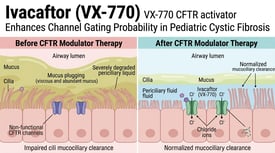
These are further subdivided into four main categories: correctors, potentiators, amplifiers, and stabilizers. Correctors, such as lumacaftor, tezacaftor, and elexacaftor, are small molecules designed to assist in the proper folding and trafficking of the F508del-CFTR protein to the cell surface. Potentiators, most notably ivacaftor, increase the open-probability of the CFTR channel once it has reached the membrane, effectively "opening the gate" for ion flow. Amplifiers are a newer class of compounds that increase the total amount of CFTR protein produced by the cell, while stabilizers prevent the premature internalization and degradation of the protein from the plasma membrane. The clinical landscape of CF treatment has been transformed by the introduction of highly effective modulator therapies (HEMT). The triple combination of elexacaftor/tezacaftor/ivacaftor (Trikafta/Kaftrio) has shown dramatic improvements in lung function, sweat chloride levels, and quality of life for approximately 90% of the CF population who carry at least one F508del mutation.
Current research is now pivoting toward the remaining 10% of patients with "nonsense" or "null" mutations that produce no protein, exploring strategies like read-through agents, mRNA therapies, and gene editing (CRISPR/Cas9). Conversely, CFTR inhibitors are being researched for the treatment of secretory diarrheas, such as those caused by cholera or rotavirus, where overactivation of CFTR leads to excessive intestinal fluid loss. Compounds like CFTRinh-172 and GlyH-101 serve as important research tools in these studies. Challenges in the field include the high cost of modulator therapies, which limits global access, and the need for long-term safety data regarding potential hepatic and ocular toxicities. Furthermore, while modulators significantly improve symptoms, they do not cure the underlying genetic defect, necessitating lifelong administration. The integration of CFTR modulators with other symptomatic treatments, such as mucolytics and antibiotics, remains the standard of care, but the ultimate goal is a personalized medicine approach that tailors chemical interventions to a patient's specific genotype.
This includes the use of patient-derived organoids to predict individual responses to different modulator combinations.