Dynamin Inhibitors
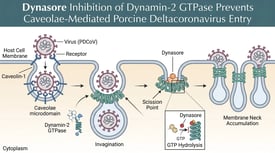
Dynamins are a family of large GTPases that play a pivotal role in membrane fission, a process fundamental to various cellular functions, most notably endocytosis (including clathrin-mediated and caveolae-mediated endocytosis) and vesicle trafficking. Dynamin-2 (Dyn2) is the most extensively studied member, essential for pinching off vesicles from the plasma membrane. Dynamin-1 (Dyn1) is neuron-specific and crucial for synaptic vesicle recycling, while Dynamin-3 (Dyn3) exhibits a more restricted expression pattern. Dynamins assemble into helical structures around the neck of nascent vesicles, and their GTP hydrolysis drives conformational changes that lead to membrane constriction and scission. Beyond endocytosis, dynamins are involved in mitochondrial fission, phagocytosis, and cytokinesis, highlighting their broad importance in cellular processes. Dysregulation of dynamin function is implicated in several diseases. Cancer cells often exhibit increased endocytosis and vesicle trafficking to support rapid proliferation, nutrient uptake, and signaling. Dyn2 is frequently overexpressed in various cancers, including breast, lung, ovarian, and glioblastoma, where it contributes to tumor growth, invasion, and metastasis by regulating growth factor receptor internalization, cell migration, and angiogenesis. In neurological disorders, mutations in Dyn1 are associated with epilepsy, and dysfunctional endocytosis and synaptic vesicle recycling are implicated in neurodegenerative diseases such as Alzheimer's and Parkinson's.
Many viruses, including HIV, influenza, and SARS-CoV-2, exploit host endocytic pathways for entry, positioning dynamins as potential antiviral targets. Furthermore, mutations in Dyn2 cause centronuclear myopathy, a severe muscle disorder. Research into dynamin inhibitors is primarily in the preclinical stage, focusing on small molecule compounds. Dynasore, a widely used, cell-permeable, non-competitive dynamin GTPase inhibitor, blocks clathrin-mediated endocytosis and has shown anti-cancer, anti-viral, and neuroprotective effects in various preclinical models. However, Dynasore lacks specificity for individual dynamin isoforms and can exhibit off-target effects. Dyngo-4a, a more potent and specific dynamin inhibitor than Dynasore, is also a widely utilized research tool. It inhibits both Dyn1 and Dyn2 and has demonstrated promise in preclinical models of cancer and viral infections. Other small molecules, such as MitMAB (a mitochondrial dynamin inhibitor), and various novel scaffolds are being developed to improve specificity and potency. Peptide inhibitors that disrupt dynamin interactions or assembly are also under investigation.
Currently, no dynamin inhibitors are approved or in advanced clinical trials. The broad physiological roles of dynamins and the challenge of achieving isoform-specific inhibition without systemic toxicity represent major hurdles. Dynamin inhibitors are classified by their mechanism (GTPase inhibitors, inhibitors of dynamin assembly, inhibitors of protein-protein interactions) and their selectivity (pan-dynamin vs. isoform-selective inhibitors, e.g., Dyn1-selective, Dyn2-selective). Key research tools include Dynasore, Dyngo-4a, and Pitstop 2 (an indirect inhibitor of dynamin function by blocking clathrin-mediated endocytosis). Challenges include achieving isoform-specific inhibition, given the high sequence homology between Dyn1 and Dyn2 in their GTPase domains. The ubiquitous and essential roles of dynamins in fundamental cellular processes raise concerns about systemic toxicity. Developing compounds with favorable pharmacokinetic properties and cell permeability is also crucial. Combination therapy is being explored, with dynamin inhibitors potentially combined with conventional chemotherapies or targeted therapies in cancer to inhibit tumor growth, overcome drug resistance (e.g., by preventing receptor recycling), and enhance drug delivery.
They also hold potential as broad-spectrum antiviral agents.