AhR Antagonists
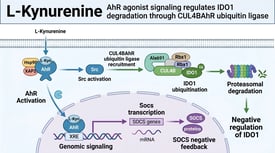
The Aryl Hydrocarbon Receptor (AhR) is a ligand-activated transcription factor belonging to the basic helix-loop-helix-Per-Arnt-Sim (bHLH-PAS) family. Historically recognized for its role in sensing and detoxifying environmental xenobiotics, such as dioxins and polycyclic aromatic hydrocarbons, the AhR is now understood to be a critical regulator of immune homeostasis, vascular development, and cellular metabolism. In its inactive state, the AhR is located in the cytoplasm in a complex with various chaperone proteins. Upon ligand binding, the receptor translocates to the nucleus, where it forms a heterodimer with the AhR Nuclear Translocator (ARNT) and binds to Xenobiotic Response Elements (XREs) to regulate the transcription of a diverse set of target genes, including members of the cytochrome P450 family (e.g., CYP1A1). In recent years, the AhR has emerged as a pivotal player in the tumor microenvironment (TME). Many tumors overexpress enzymes like Indoleamine 2,3-dioxygenase 1 (IDO1) and Tryptophan 2,3-dioxygenase (TDO2), which catabolize the essential amino acid tryptophan into kynurenine.
Kynurenine acts as a potent endogenous ligand for the AhR, and its activation leads to the induction of an immunosuppressive environment. This occurs through the promotion of regulatory T cell (Treg) differentiation, the inhibition of dendritic cell maturation, and the suppression of effector T cell functions. Consequently, AhR antagonists are being vigorously pursued as a novel class of cancer immunotherapies designed to "re-awaken" the immune system against tumors. Beyond oncology, AhR signaling is implicated in autoimmune diseases, such as multiple sclerosis and rheumatoid arthritis, as well as inflammatory skin conditions like atopic dermatitis. Current research progress has led to the identification of several potent small-molecule AhR antagonists that are now entering clinical evaluation. For example, BAY 2416964 and IK-175 are selective AhR antagonists being tested in patients with advanced solid tumors, both as monotherapies and in combination with PD-1 inhibitors.
These inhibitors are generally classified by their chemical scaffolds and their ability to compete with various endogenous and exogenous ligands. A significant challenge in targeting the AhR is the receptor's high degree of ligand diversity and its tissue-specific functions; in some contexts, AhR activation can be anti-inflammatory, while in others, it is pro-inflammatory or pro-tumorigenic. This complexity necessitates a deep understanding of the specific AhR-driven pathways active in a given disease state. Furthermore, because the AhR is involved in normal physiological processes like liver function and hematopoiesis, potential "on-target" toxicities must be carefully monitored during clinical development. Research tool compounds like CH-223191 have been essential for defining the AhR's role in immunology. As the field moves forward, the integration of AhR antagonists into multi-modal treatment regimens and the discovery of predictive biomarkers for ligand levels will be essential for realizing the therapeutic potential of this ancient environmental sensor.