cGAS Inhibitors
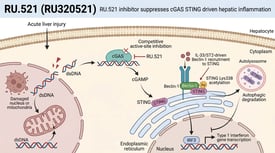
Cyclic GMP-AMP synthase (cGAS) is a pivotal pattern recognition receptor that functions as a primary sensor of cytosolic double-stranded DNA (dsDNA). Under normal physiological conditions, DNA is sequestered within the nucleus or mitochondria. However, the presence of DNA in the cytoplasm—whether derived from invading pathogens (viruses, bacteria), damaged mitochondria, or genomic instability in cancer cells—serves as a potent "danger signal." Upon binding to dsDNA in a sequence-independent manner, cGAS undergoes a conformational change and catalyzes the synthesis of the second messenger cyclic GMP-AMP (cGAMP) from ATP and GTP. cGAMP then binds to and activates the Stimulator of Interferon Genes (STING) protein located on the endoplasmic reticulum membrane. This activation triggers a signaling cascade involving TBK1 and IRF3, ultimately leading to the production of Type I interferons (IFNs) and other pro-inflammatory cytokines, which orchestrate the innate immune response. Dysregulation of the cGAS-STING pathway is implicated in a wide range of human diseases.
Chronic overactivation of this pathway is a major driver of several autoimmune and autoinflammatory disorders. For example, Aicardi-Goutières syndrome (AGS) is caused by mutations in DNA-degrading enzymes (like TREX1), leading to the accumulation of endogenous DNA and constitutive cGAS activation. Similarly, the cGAS-STING axis plays a significant role in the pathogenesis of systemic lupus erythematosus (SLE), Sjögren's syndrome, and certain types of interferonopathies. Beyond autoimmunity, cGAS activation has been linked to age-related macular degeneration, neurodegenerative diseases (such as Parkinson's and Alzheimer's), and inflammatory conditions like non-alcoholic steatohepatitis (NASH). In the context of oncology, the role of cGAS is dual-edged; while it is essential for anti-tumor immunity, chronic low-level activation in some tumors can promote an immunosuppressive microenvironment and metastasis. The development of cGAS inhibitors is a rapidly evolving field, with several classes of small molecules currently under investigation.
These inhibitors can be classified by their mechanism of action: those that interfere with DNA binding, those that block the catalytic site (ATP/GTP binding pocket), and those that prevent cGAS dimerization. Early tool compounds like RU.521 have been instrumental in validating cGAS as a therapeutic target in preclinical models of AGS and SLE. More recently, high-affinity inhibitors such as G150 and PF-06928215 have been developed with improved potency and selectivity. While most current inhibitors are in the preclinical stage, the pharmaceutical industry is actively pursuing drug candidates for clinical trials. Challenges in the field include achieving high selectivity over other nucleotidyltransferases and ensuring adequate cellular permeability and metabolic stability. Furthermore, because the cGAS-STING pathway is vital for host defense against viruses, long-term inhibition may carry a risk of increased susceptibility to infections.
Future research is focused on fine-tuning the balance between suppressing pathological inflammation and maintaining protective immunity, as well as exploring the potential of cGAS inhibitors in combination with other immunomodulatory agents.