CRISPR/Cas9 Modulators
The CRISPR/Cas9 system, originally discovered as an adaptive immune mechanism in bacteria, has revolutionized the field of genome engineering. It operates through a simple yet elegant mechanism where a guide RNA (gRNA) directs the Cas9 endonuclease to a specific genomic locus, where it induces a double-strand break (DSB). The subsequent repair of this break by the cell’s endogenous machinery—either through the error-prone non-homologous end joining (NHEJ) or the precise homology-directed repair (HDR)—allows for gene knockout or precise sequence insertion. Despite its transformative potential, the clinical application of CRISPR/Cas9 is hindered by several challenges, including off-target effects, low HDR efficiency, and the potential for long-term Cas9 activity to trigger immune responses or genomic instability. This has led to the intensive development of CRISPR/Cas9 modulators, which include both inhibitors and enhancers designed to provide temporal and spatial control over the editing process. CRISPR inhibitors, often referred to as anti-CRISPR (Acr) proteins, were first identified in bacteriophages as a means to evade bacterial CRISPR systems. These proteins can block Cas9 at various stages, such as preventing DNA binding or inhibiting the cleavage activity.
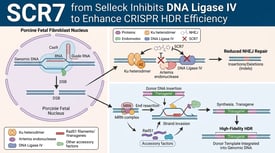
Small-molecule inhibitors have also been developed to provide more "drug-like" control. For instance, compounds that disrupt the Cas9-gRNA complex or prevent the conformational changes required for DNA cleavage are being actively researched. These inhibitors are crucial for "switching off" Cas9 after the desired edit has been made, thereby minimizing the window for off-target mutations. Conversely, CRISPR enhancers focus on improving the precision of the edit. A major area of research involves small molecules that shift the balance from NHEJ toward HDR, such as SCR7 (a DNA ligase IV inhibitor) or RS-1 (a RAD51 stimulator). These modulators are essential for therapeutic applications requiring gene correction rather than just disruption. The current landscape of CRISPR modulators is rapidly evolving, with many compounds in the preclinical stage.
The first CRISPR-based therapy, Casgevy (exagamglogene autotemcel), was recently approved for sickle cell disease and beta-thalassemia, marking a historic milestone. However, this therapy involves ex vivo editing; for in vivo applications, the role of modulators becomes even more critical. Modulators are classified by their mechanism (binding interference, enzymatic inhibition, or repair pathway modulation) and their chemical nature (proteins, peptides, or small molecules). One of the significant challenges in this field is the delivery of these modulators to the target tissue alongside the CRISPR machinery. Furthermore, the timing of modulator administration is critical; an inhibitor given too early will prevent the desired edit, while one given too late may not prevent off-target effects. Future research is focused on developing "smart" modulators that respond to specific cellular signals, ensuring that CRISPR activity is restricted to the correct cell type and time frame. This level of control is essential for the safe and effective expansion of CRISPR technology into a broader range of human diseases, including cancer and neurodegenerative disorders.